


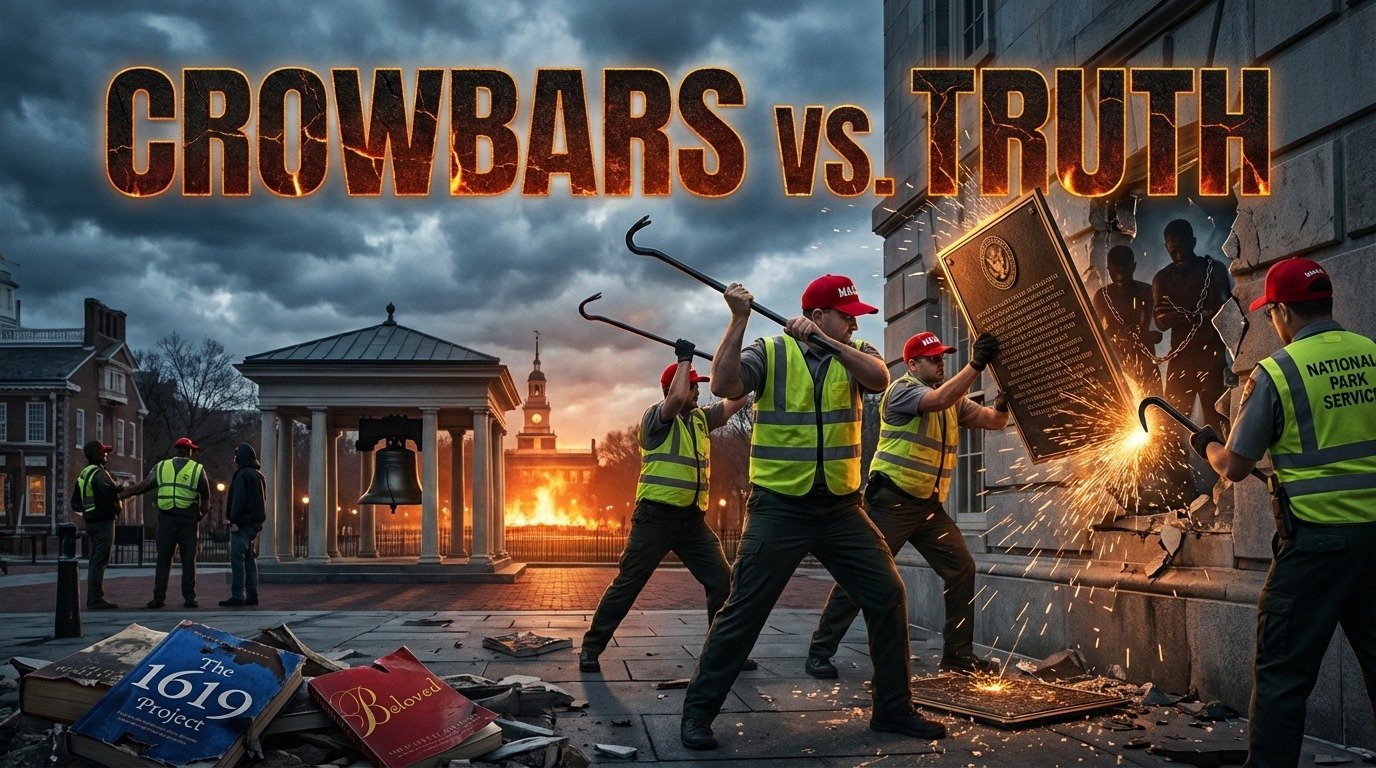
They Didn’t Just Take Down Plaques – They Tried to Take Down People
They didn’t just remove metal panels in Philadelphia. They tried to remove people from history.
When workers pried exhibit panels off the President’s House site on Independence Mall, they weren’t just taking down displays. They were aiming for the memory of the nine enslaved Africans who lived and labored in the very place where American “freedom” was being defined.
At the Black Contractors Association – Alabama Chapter (BCAAC), and through the Ban Books Tour, we understand something deeply: you cannot build justice on erased history. You cannot claim democracy while editing out the people whose suffering funded it.
This was not maintenance.
This was not reframing.
This was not neutral.
This was erasure.
What Happened in Philadelphia
In January 2026, National Park Service crews arrived at the President’s House site, steps from the Liberty Bell and Independence Hall and removed exhibit panels that had stood since 2010. These panels told the story of the nine enslaved men and women held by George Washington in the house where he lived while serving as president.
They told visitors a hard truth: that the birthplace of American liberty was also a site of Black bondage.
Workers used crowbars to pry panels from their mounts and load them into trucks. The physical act mirrored the symbolic one, removing Black lives from public memory.
Philadelphia officials and civil rights advocates immediately pushed back. The city filed legal action, arguing that the removals violated agreements and amounted to historical whitewashing. The message from the community was clear: this is not about accuracy. It is about comfort. It is about control.
Why This Hits So Hard in Philadelphia
Philadelphia is a city of revolutionary symbolism, but it is also a city with a deep history of racial trauma.
In 1985, the Philadelphia Police Department dropped a military-grade bomb on the MOVE organisation’s row house in a Black neighborhood. Eleven people were killed, including five children. Sixty-one homes were destroyed. Families were displaced. A neighbourhood was burned by the very government sworn to protect it.
No one was criminally convicted.
That trauma still lives in Philadelphia’s collective memory.
So when plaques about enslaved Africans are ripped off walls in 2026, Black communities do not see “policy changes.” They see a pattern.
Erase the people.
Erase the pain.
Erase the proof.
Then ask for trust.
A National Pattern of Erasure
Philadelphia is not isolated.
Across the country, Black history is being softened, restricted, or removed under the language of “balance,” “neutrality,” or “not making people uncomfortable.”
A 2025 executive order directing federal agencies to remove exhibits deemed to “disparage” Americans has accelerated this trend. Under that framework, slavery, lynching, segregation, and systemic racism are increasingly framed as “too negative,” “too divisive,” or “too political.”
The result is predictable:
Books are pulled from libraries.
Civil rights exhibits are revised or removed.
Teachers are pressured.
Students are denied full context.
At the Ban Books Tour, we see this clearly: this is not about protecting children. This is about protecting narratives.
Why This Matters Beyond Museums
This is not just about plaques and panels.
This is about who gets to decide what counts as American history.
When the stories of enslaved people are removed from public spaces, it sends a message: some truths are optional. Some pain is inconvenient. Some lives are uncomfortable to acknowledge.
For Black communities, that message is familiar.
Our ancestors were erased in life, denied education, denied citizenship, and denied humanity. Now their stories are being erased from memory, removed from textbooks, stripped from walls, and banned from shelves.
What does it say to a Black child when their history is labeled “disparaging”?
What does it teach when the brutality that shaped this nation is treated as something to hide?
At BCAAC, our work is rooted in access, equity, and accountability in construction and economic opportunity. But we know that economic justice cannot exist without historical truth.
You cannot fix systems you refuse to fully name.
The Danger of Sanitised History
Sanitised history does not heal. It lies.
It turns slavery into a side note.
It turns racial terror into “unfortunate events.”
It turns resistance into “disruption.”
This kind of storytelling is not accidental. It protects power. It preserves comfort. It allows institutions to avoid accountability.
The President’s House panels told a dangerous truth: that American greatness was built alongside American brutality.
That truth makes people uncomfortable.
And too often, discomfort is treated as something to be eliminated instead of something to be learned from.
Philadelphia Is Fighting Back
Philadelphia leaders, historians, and community organizations have refused to be silent.
Coalitions like Avenging the Ancestors Coalition have long fought to ensure slavery is properly acknowledged at national landmarks. City officials have challenged the removals. Community members have turned empty frames into protest sites.
That matters.
Because history does not belong to executive orders.
It belongs to the people who lived it and the descendants who carry it.
Why This Is a Global Issue
What happens in Philadelphia matters far beyond the city itself.
Around the world, societies wrestle with how honestly to tell stories of colonization, enslavement, genocide, and oppression. When one of the world’s most powerful nations chooses to soften its own history, it sends a powerful signal.
If the truth can be edited here, it can be edited anywhere.
That is why the Ban Books Tour exists to defend truth, protect access, and challenge efforts to make history more comfortable at the expense of honesty.
A Call to Remember and Resist
They may remove panels.
They may pull books.
They may revise curricula.
But memory lives in people.
We call on communities everywhere to:
Demand full history in public spaces
Support restoration and legal challenges
Protect libraries and educators
Defend banned and challenged books
Refuse sanitised narratives
Because if the enslaved can be erased from the President’s House, then no history is safe.
And we will not accept that.
Not in Philadelphia.
Not in Mississippi.
Not anywhere.
History is watching.
— Black Contractors Association – Alabama Chapter (BCAAC)
The Ban Books Tour
Post a comment
Related Posts

January 7, 2026
Why the Black Contractors Association Alabama Chapter Supports Marriott International’s Stand on Inclusion
By Jarrod Sims, PresidentBlack Contractors Association – Alabama Chapter Corporate responsibility is most clearly demonstrated…
December 18, 2025
Regional Water Board Ends HUB Program, Raising Equity and Inclusion Concerns in Birmingham
Birmingham’s regional water system has ended its Historically Underutilized Business (HUB) program following a politically…
November 28, 2025
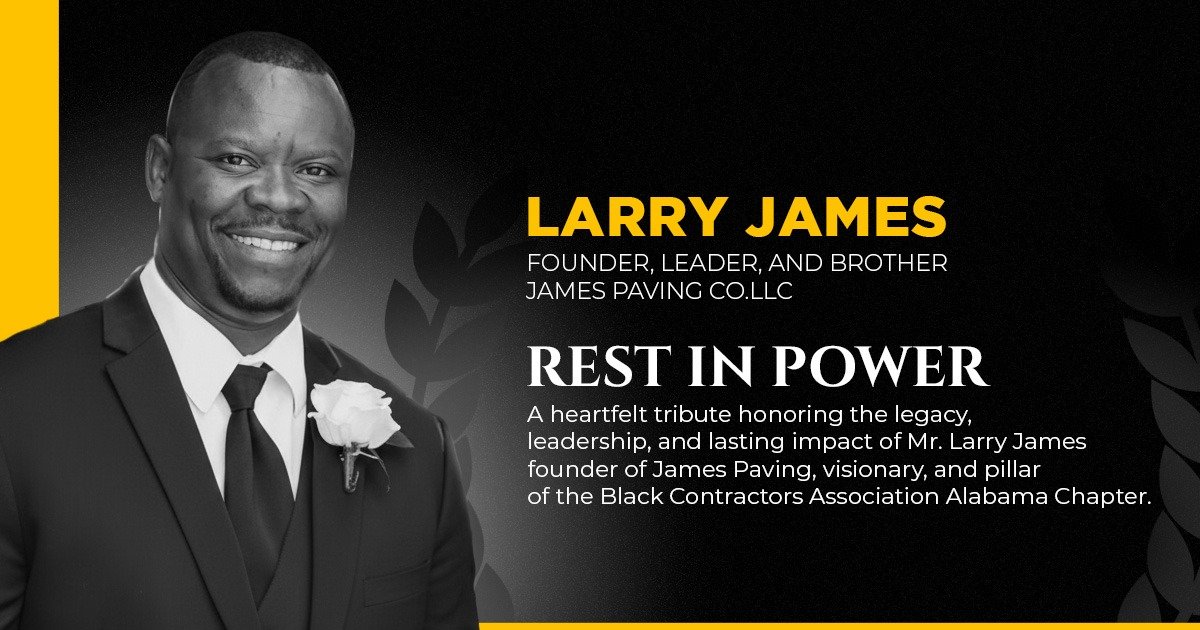
Honoring Mr. Larry James: Founder of James Paving
The Black Contractors Association Alabama Chapter (BCAAC) honours the life, legacy, and extraordinary leadership of…

November 22, 2025
Honoring the Legacy of Mr. Larry James: A Tribute
Today, the Black Contractors Association Alabama Chapter pauses with heavy hearts to honor the life,…